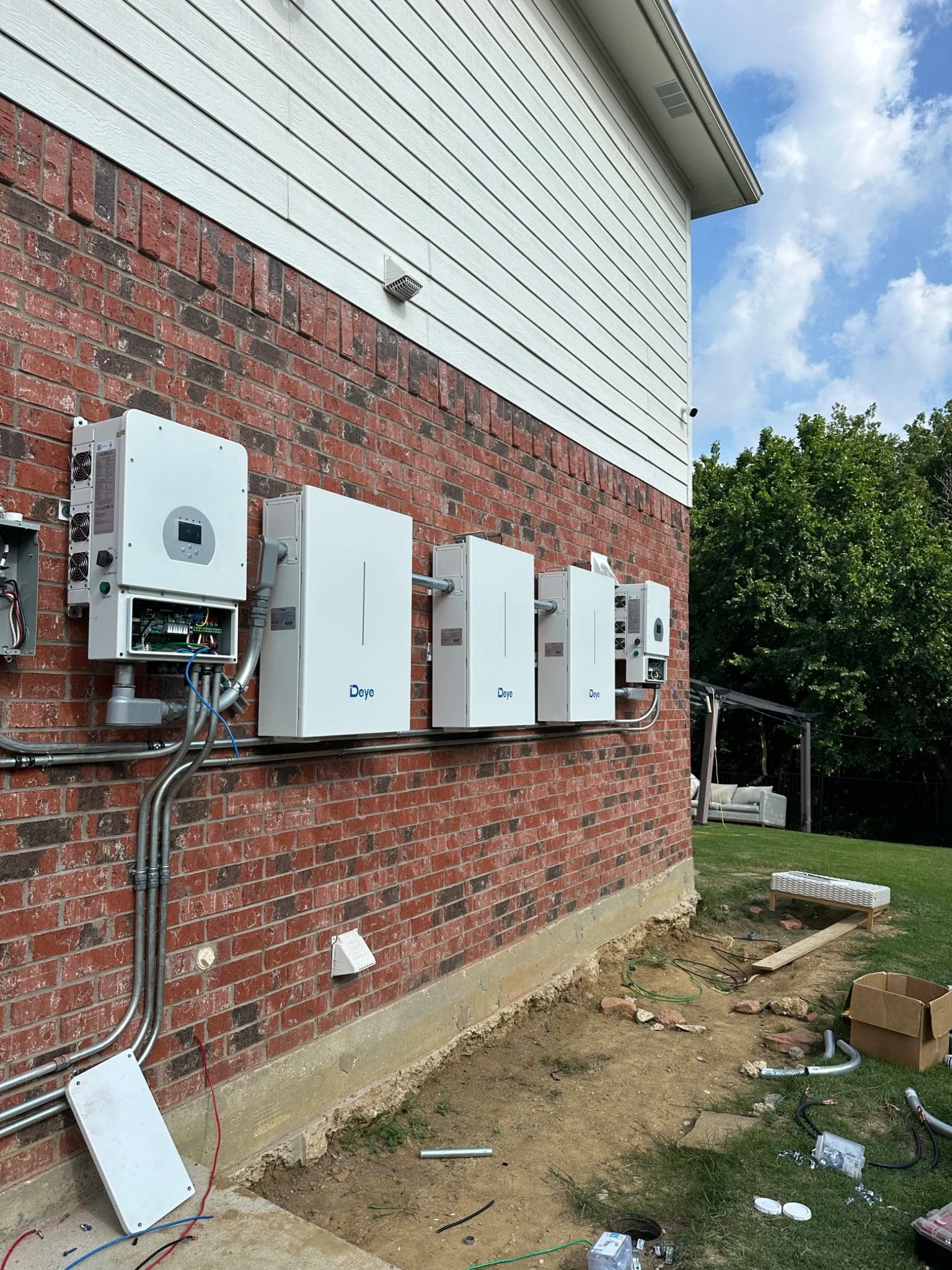
Generator & Battery Backup Planning in North DFW
Define essential loads, outage priorities, and the electrical scope for your home or commercial property.
Discuss Your Backup Power Project · Call (940) 308-5100
Backup-power planning starts with a practical question: what must keep operating when utility power stops? For a home, commercial property, or multifamily building in North DFW, the answer sets the scope for generator, battery, transfer-equipment, and electrical-system discussions.
Define Essential Loads Before Comparing Equipment
List the equipment you want to support, its operating schedule, and the outage duration you want to prepare for. Separate essential loads from equipment you can temporarily leave off. Provide equipment nameplates, existing panel schedules, available drawings, and any previous backup-system documentation.
For an occupied property, identify acceptable interruptions, access hours, and equipment that cannot tolerate a transfer delay. These are project requirements to review, not performance assumptions to make from a product brochure.
Generator, Battery, or a Coordinated System?
Generator inquiries: Include the intended loads, available fuel information, proposed equipment location, and existing electrical service. The project review must address the installation scope, transfer equipment, site conditions, and responsible qualified providers.
Battery inquiries: Compare both power capacity, measured in kilowatts, and stored energy, measured in kilowatt-hours. They describe different capabilities. Runtime depends on the actual loads and usable system capacity; a battery energy rating alone does not promise a particular outage duration.
Solar-plus-storage inquiries: Existing solar panels do not automatically provide outage power. Backup operation depends on compatible equipment and a configuration that can safely operate apart from the utility supply. Identify the inverter, battery, and control equipment already installed.
Coordinate the Existing Electrical System
Backup power connects to a larger system. Existing service equipment, panels, circuit arrangements, and proposed additions all matter. If you are also adding equipment or expanding the property, review our electrical panel and service-upgrade guide.
For a new building or a larger site, connect the backup-power discussion with electrical site infrastructure and preconstruction coordination. Facility teams can also review commercial electrical scope, sequencing and closeout planning. Equipment selection, professional design responsibilities, permits, installation, testing, and handover requirements must be established for the specific project.
Information to Send for a Backup-Power Inquiry
Project city, property type, and whether the building is occupied.
Essential equipment, desired operating duration, and any transfer-delay limits.
Existing service, panel, generator, solar, and battery information, where available.
Drawings, equipment schedules, site photographs, and proposed locations.
Target schedule, access constraints, and any planned construction or electrical upgrades.
Use our commercial and multifamily bid checklist for a construction package. Homeowners can start with a description through the form below or contact Twins Engineering 2 LLC.
Backup Power Questions
Can a generator connect through a wall outlet?
No. Improvised connections can backfeed utility wiring. Building connections require a qualified electrician and suitable transfer equipment.
Can a portable generator run in an open garage?
No. Fuel-powered portable generators produce carbon monoxide. Operate them outdoors, away from openings and air intakes, following the manufacturer’s instructions and applicable safety guidance.
Can you promise whole-building backup from an initial inquiry?
The supported loads, operating limits, equipment, scope, and responsibilities need a project-specific review. Confirm the agreed requirements in writing.
Technical background: DOE: Solar Energy and Storage Basics · DOE: Solar and Resilience · OSHA: Portable Generator Safety.
Discuss Your Backup Power Project